Blog
The rise of remote work has fundamentally changed how we think about professional spaces. For many, the traditional office commute has been replaced by a few steps across the garden. Garden offices have emerged as a practical solution for those seeking a dedicated workspace that balances professional needs with domestic life, offering physical separation without the expense or commitment of external office rental.
Creating an effective garden workspace involves far more than simply placing a desk in a shed. From structural considerations and climate control to security measures and financial planning, transforming a garden structure into a functional year-round office requires careful thought across multiple dimensions. This comprehensive exploration examines the essential elements that determine whether your garden office becomes a productivity haven or an expensive mistake.
Whether you’re considering a prefabricated solution or a custom build, understanding the fundamentals of construction methods, insulation techniques, security vulnerabilities, and financial implications will help you create a workspace that genuinely supports your professional goals while adding tangible value to your property.
Why Garden Offices Are Transforming Remote Work
The kitchen table might seem like a convenient workspace, but it comes with hidden costs to your productivity and wellbeing. Working in shared domestic spaces creates a persistent challenge: context switching. Your brain struggles to maintain professional focus when surrounded by reminders of household tasks, family activities, and domestic responsibilities.
Research on environmental psychology demonstrates that physical boundaries significantly impact cognitive performance. When your workspace shares the same visual and acoustic environment as your living space, your mind never fully transitions into work mode. The washing machine’s hum, the breakfast dishes still visible, the sofa beckoning—each creates micro-distractions that fragment concentration.
A garden office addresses this by providing what psychologists call spatial anchoring. The physical act of walking to a separate structure creates a mental transition, a commute measured in steps rather than miles. This separation serves multiple functions:
- Establishes clear boundaries between professional and personal time
- Reduces domestic distractions and interruptions during work hours
- Creates a dedicated environment optimized for focus rather than relaxation
- Provides visual privacy for video calls and confidential work
- Allows customization of lighting, acoustics, and ergonomics specifically for productivity
Beyond immediate productivity gains, garden offices offer something increasingly valuable in remote work culture: the ability to genuinely disconnect at day’s end. When your office exists as a physical location you can leave, you restore the psychological benefits of work-life separation that remote workers often struggle to maintain.
Building Your Garden Office: Key Decisions and Approaches
The construction approach you choose fundamentally shapes your garden office experience, affecting everything from timeline and budget to customization possibilities and long-term satisfaction. Two primary paths dominate the market, each with distinct advantages and trade-offs worth understanding before making financial commitments.
Prefab Pods vs Custom Builds
Prefabricated garden pods offer speed and predictability. These factory-manufactured units arrive substantially complete, often requiring only foundation preparation and connection to power sources. Installation typically completes within days rather than weeks, and pricing tends to be more transparent, with fewer unexpected costs during the process. Modern prefab solutions have evolved significantly, offering contemporary designs with integrated insulation, electrical systems, and often impressive warranty coverage.
However, customization represents their primary limitation. While you can often choose finishes and layouts from available options, you’re fundamentally selecting from predetermined designs. Site-specific challenges—unusual garden shapes, existing landscaping, or access restrictions—can make installation complicated or impossible.
Custom builds provide maximum flexibility but require greater involvement. Working with contractors or undertaking a self-build allows you to optimize every dimension for your specific site and needs. Awkward spaces become opportunities rather than obstacles, and you can specify exactly the features, materials, and layout that serve your working style. This approach often proves more cost-effective for larger structures or when you have particular requirements that prefab solutions don’t address.
The trade-off comes in time, complexity, and potential cost uncertainty. Custom builds require coordinating multiple contractors, navigating potential planning permissions, and managing a construction timeline vulnerable to weather and availability issues.
Year-Round Usability Considerations
A garden office that’s comfortable only during mild weather represents poor value. Year-round functionality requires planning for extreme temperatures from the initial design phase, not as an afterthought. This means considering orientation to maximize or minimize solar gain depending on your climate, planning for adequate power capacity to support heating and cooling, and ensuring sufficient ventilation to prevent moisture accumulation.
Window placement dramatically affects temperature regulation. South-facing windows (in northern hemisphere locations) provide passive solar heating during winter but can create unbearable conditions in summer without adequate shading or thermal control. Similarly, insulation quality—discussed in detail below—determines whether your heating system works efficiently or simply hemorrhages money warming the surrounding garden.
Insulation and Climate Control Essentials
The difference between a usable garden office and an expensive garden ornament often comes down to a single factor: thermal performance. Many shed conversions and budget garden offices fail precisely here, becoming unbearably cold in winter and oppressively hot in summer, ultimately abandoned for the very kitchen table they were meant to replace.
Winter Protection Strategies
January temperatures test garden office design ruthlessly. Structures without proper insulation face a losing battle against heat loss, where even powerful heaters struggle to maintain comfortable temperatures while electricity costs soar. Effective winter protection requires a systematic approach addressing all six surfaces of your structure:
- Floor insulation—often overlooked but critical, as cold rising from the ground creates persistent discomfort even when walls and ceiling are well-insulated
- Wall cavity insulation—using materials with appropriate R-values for your climate, properly installed to avoid thermal bridges
- Roof insulation—where the greatest heat loss typically occurs, requiring the most robust insulation treatment
- Window specifications—double or triple glazing with low-emissivity coatings dramatically reduces heat loss through glass
- Door seals and draught exclusion—gaps around doors can undermine otherwise excellent insulation
- Vapor barriers—preventing moisture from condensing within insulation where it reduces effectiveness and promotes decay
The specific materials matter less than their appropriate application. Whether you choose rigid foam boards, spray foam, mineral wool, or natural alternatives like sheep’s wool, each must be installed with attention to continuity, avoiding gaps that create thermal bridges where cold penetrates.
Temperature Regulation Techniques
Effective climate control extends beyond simply adding insulation. Thermal mass—materials that absorb and slowly release heat—can moderate temperature swings, making spaces more comfortable with less active heating or cooling. Ventilation strategy proves equally important; your garden office needs to breathe without creating draughts, removing moisture and stale air while maintaining temperature.
Many successful garden offices employ layered climate control: basic insulation provides the foundation, while supplementary heating (electric radiators, underfloor heating, or heat pumps) addresses extreme conditions. Air circulation, whether through ceiling fans or ventilation systems, prevents hot or cold spots from developing and helps distribute conditioned air efficiently.
Security Features That Protect Your Investment
Garden offices present a unique security challenge. Unlike your main residence with its established locks, alarm systems, and neighborhood visibility, these structures often sit at the rear of properties, partially concealed and distinctly vulnerable. Thieves recognize this, and garden offices have become attractive targets, particularly when they house expensive equipment like computers, monitors, and other technology essential for professional work.
The most common security flaw? Inadequate locking mechanisms paired with construction that’s easier to breach than intruders expect. Many standard shed locks can be defeated in seconds with simple tools, and thin wall construction allows forced entry with minimal noise or time. Windows, while essential for natural light and wellbeing, create additional vulnerability points when secured only with basic latches.
A comprehensive security approach addresses multiple layers:
- Structural integrity—using construction materials and methods that resist forced entry, not just weather
- High-quality locks—deadbolts and security-rated locks on doors, supplemented by internal bolts for additional overnight security
- Window security—laminated glass that doesn’t shatter easily, combined with key-operated window locks or security bars that don’t compromise aesthetics
- Lighting—motion-activated external lights that eliminate the concealment darkness provides
- Visibility—strategic positioning or landscaping that allows casual observation from the house while maintaining garden office privacy
- Alarm systems—either integrated with your home security or standalone systems that alert you to unauthorized entry
- Asset tracking—registering equipment serial numbers and considering tracking devices for high-value items
Security needn’t create a fortress aesthetic. Modern solutions integrate discreetly, providing protection without transforming your garden office into something resembling a bunker. The goal is creating sufficient deterrence and delay that opportunistic thieves move on to easier targets.
Financial Benefits and Tax Considerations
Garden offices represent significant investments, typically ranging from several thousand to tens of thousands in expenditure. Understanding the financial dimensions—both the value they potentially add and the tax treatment of construction and ongoing costs—helps justify this investment and optimize its financial impact.
Property Value Impact
The effect on property value varies considerably based on quality, size, and local market conditions. A well-constructed, properly permitted garden office with year-round functionality typically adds value, though rarely pound-for-pound with construction costs. Estate agents consistently note that attractive, functional garden offices appeal to buyers, particularly in markets where remote work has become normalized.
The value proposition strengthens when the structure offers versatility—a garden office that could alternatively serve as a studio, gym, or guest accommodation provides more potential buyers with relevant use cases. Conversely, highly specialized designs or those that dominate small gardens may appeal to fewer buyers, potentially limiting value addition.
Quality proves crucial. A premium prefab pod or expertly executed custom build reads as a property enhancement. A poorly insulated shed conversion with visible budget compromises may add little value or potentially signal deferred maintenance concerns to prospective buyers.
Tax Relief Opportunities
In many tax jurisdictions, legitimate business use of a garden office creates opportunities for tax deductions or relief on construction costs, ongoing expenses, and sometimes even a portion of property costs. The specifics vary significantly by location and tax system, making professional advice essential, but common possibilities include:
- Claiming construction costs as business expenses or capital allowances when the structure serves exclusively or primarily for business purposes
- Deducting proportional utility costs (electricity, internet) attributable to business use
- Claiming expenses for maintenance, insurance, and repairs related to the business-use structure
- In some jurisdictions, claiming a simplified home office deduction that accounts for dedicated business space
Documentation proves essential for any tax claims. Maintaining clear records of expenditure, demonstrating exclusive or primary business use, and understanding the distinction between capital improvements and ongoing expenses helps ensure claims withstand scrutiny. Some tax authorities require that garden offices serve business purposes exclusively, while others permit proportional claims for mixed-use spaces.
Importantly, tax relief on construction doesn’t necessarily translate to positive treatment when selling your property. Some jurisdictions may adjust capital gains calculations based on business-use deductions previously claimed, potentially recapturing some tax benefits. Professional tax advice tailored to your specific situation and jurisdiction proves invaluable in navigating these complexities.
Creating an effective garden office requires balancing multiple considerations—from construction methods and climate control to security planning and financial optimization. The investment in proper planning, quality materials, and thoughtful design pays dividends in daily productivity, long-term satisfaction, and potential property value enhancement. As remote work continues reshaping professional life, the garden office has evolved from a novel solution to an increasingly essential element of the contemporary home, offering dedicated workspace that respects both professional requirements and personal wellbeing.

How to Trek to Everest Base Camp Without Exploiting Porters?
Contrary to popular belief, ethical trekking isn’t about generous tips or choosing a company with a nice website; it’s about auditing the economic model of your trek to dismantle systems of exploitation. Cheap treks are a direct and undeniable indicator…
Read more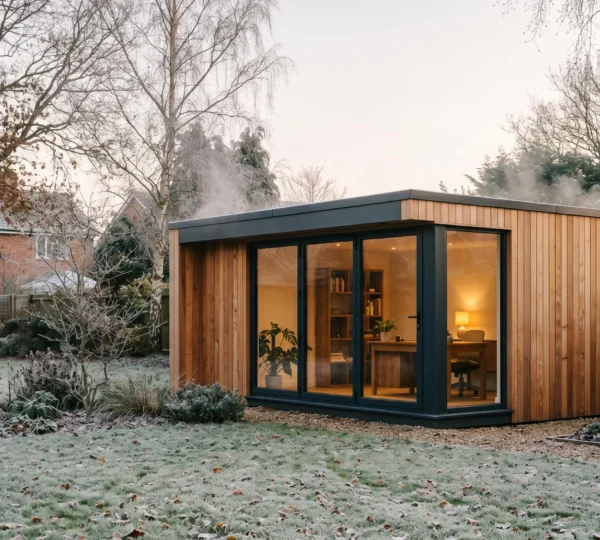
How to Design a Year-Round Garden Office: Your Blueprint for Productivity and Property Value
Building a successful year-round garden office is less about DIY and more about architectural systems thinking. Prioritise the ‘unseen’ infrastructure: a complete thermal envelope for winter, layered security compliant with insurance standards, and a robust data connection. Treating the build…
Read more