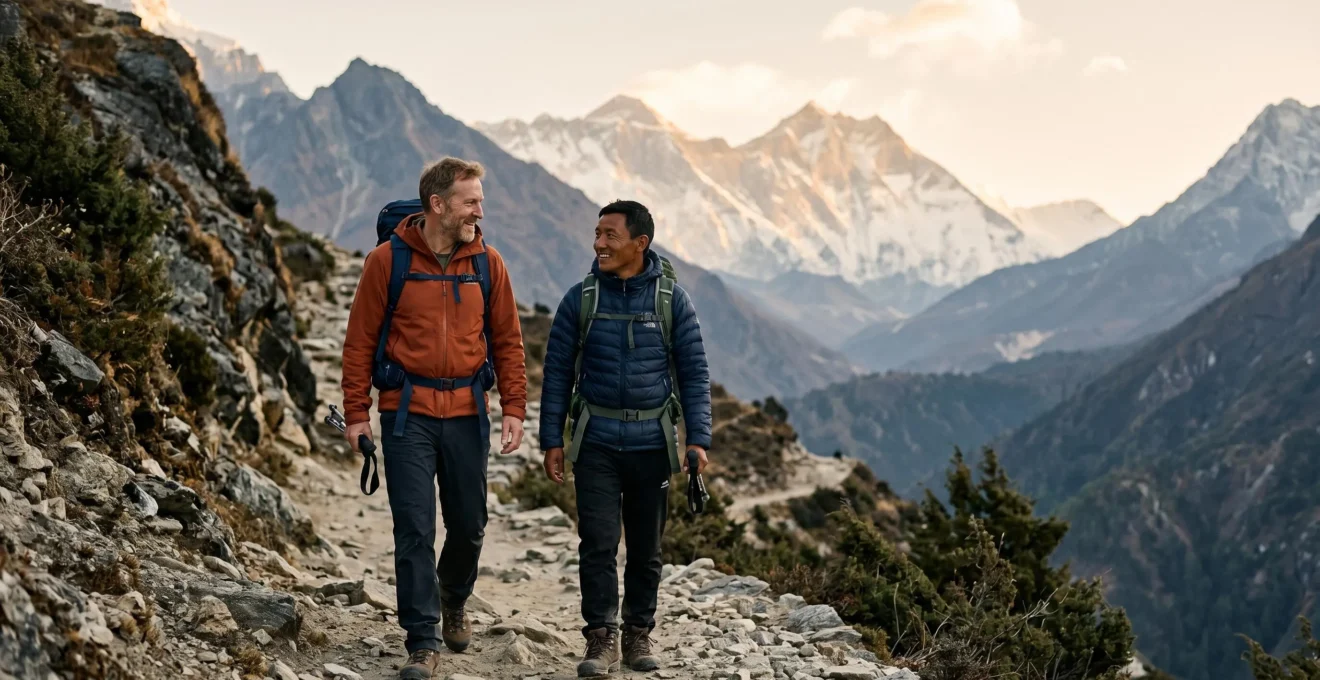
Contrary to popular belief, ethical trekking isn’t about generous tips or choosing a company with a nice website; it’s about auditing the economic model of your trek to dismantle systems of exploitation.
- Cheap treks are a direct and undeniable indicator of underpaid, under-equipped, and uninsured porters.
- Your choices regarding pack weight, water purification, and trail etiquette are not minor details—they are critical factors in porter safety and workload.
Recommendation: Before booking, use a structured audit to demand transparency on porter wages, weight limits, and insurance. Be prepared to walk away if the answers are vague or the price seems too good to be true.
The dream of standing in the shadow of Mount Everest, surrounded by the colossal peaks of the Himalayas, is a powerful lure. It represents adventure, personal achievement, and a connection to something larger than ourselves. But as an ethical auditor, you must ask an uncomfortable question: who pays the real price for this dream? Too often, the answer is the very people who make the journey possible—the porters. The trekking industry is rife with structural exploitation disguised as budget-friendly adventures.
Many travelers believe that choosing a “reputable” agency or leaving a good tip is enough. This is a dangerous misconception. True ethical trekking is not an act of charity or personal kindness. It is an act of economic accountability. It requires you to shift your mindset from that of a passive tourist to an active auditor of the entire supply chain, from the sales office in Kathmandu to the last footstep on the trail. You are not there to be a savior, but to be an informed consumer who refuses to participate in a system that treats human life as a disposable commodity.
This guide is not a checklist for feeling good; it is a framework for doing good. It will equip you to dissect company promises, understand the real-world implications of your packing list, and recognize that every decision you make has a direct impact on the health, safety, and dignity of the porters. We will deconstruct the price of a “cheap” trek, analyze your logistical choices through a human rights lens, and establish a clear protocol for what to do when things go wrong. Your journey to Base Camp begins not at the trailhead in Lukla, but with the moral audit you conduct right now.
To navigate this complex ethical landscape, this article is structured to provide a comprehensive audit of your responsibilities as a trekker. The following sections will guide you through the critical areas where your choices can either perpetuate exploitation or promote fair and dignified labor practices.
Summary: How to Trek to Everest Base Camp Without Exploiting Porters?
- Why Cheap Treks Often Mean Underpaid and Under-Clothed Porters?
- How to Keep Your Duffle Bag Under 10kg Without Freezing?
- Filter or Boil: How to Avoid Buying 50 Plastic Bottles on the Trail?
- The Headache You Must Not Ignore Above 3,000 Metres
- When to Trek Annapurna to Avoid Leeches and Crowds?
- The Footpath Erosion Caused by Tourists Taking Shortcuts
- Circular Walk or Ridge Scramble: Which Is Safe for Beginners?
- How to Prepare for a Peak District Hike When Rain Is Forecast?
Why Cheap Treks Often Mean Underpaid and Under-Clothed Porters?
The most significant red flag in the trekking industry is a price that seems too good to be true. It always is. The brutal economics of a “budget” trek are balanced on the backs of porters. When an agency cuts costs, porter wages, equipment, and insurance are the first expenses to be slashed. While trekkers are clad in hundreds of dollars of technical gear, porters are often forced into a debt cycle, renting basic equipment or working in inadequate clothing. As U.S. mountaineer Mellissa Arnot Reid stated in an interview with Outside Magazine, the industry she is part of can be one where her “passion created an industry that fosters people dying. It supports humans as disposable, as usable.”
This isn’t an isolated problem; it is a structural feature of the budget trekking market. Agencies competing on price alone create a race to the bottom where human welfare is a negotiable line item. Many porters, burdened by the need to provide for their families, have little choice but to accept these conditions. According to recent wage economy data, porters earn between $15 to $25 per day, but a significant portion of this can be consumed by food and lodging on the trail if not fully covered by the agency. Worse, a case study on porter working conditions highlights how many lack adequate clothing, forcing them to work under harsh conditions with significant health risks and without the medical support available to trekkers.
Your first and most important job as an ethical auditor is to investigate a company’s finances. Do not be shy. Ask direct questions about their cost breakdown. If a company cannot transparently explain how their price provides for fair wages, proper gear, and comprehensive insurance for their porters, you must walk away. Your refusal to participate is the most powerful tool you have.
Your Pre-Trek Ethical Audit Checklist
- Map the Claims: List all channels where the company makes ethical promises (website, brochures, social media, emails). What exactly do they claim about porter welfare?
- Collect the Evidence: Request their specific, written policies on porter wages, insurance coverage (including helicopter evacuation), weight limits, and provision of food, lodging, and gear.
- Assess for Coherence: Cross-reference their claims with their price. Does a $1200 all-inclusive trek price realistically cover a living wage, insurance, agency profit, and your own logistics? If it seems impossible, it is.
- Evaluate Authenticity: Look for evidence of genuine relationships. Do they feature their porter and guide team with names and stories (with consent), or do they use generic mountain stock photos? Vague marketing hides poor practices.
- Formulate Your Action Plan: Identify any gaps or vague statements in their policies. Create a list of non-negotiable questions to ask them directly. If they cannot provide clear, verifiable answers, you must refuse to book with them.
How to Keep Your Duffle Bag Under 10kg Without Freezing?
The second pillar of ethical trekking is a radical commitment to minimalism. Every single item in your duffel bag contributes to the load on your porter’s back. While agencies may state a limit of 15kg for your bag, the ethical auditor aims lower. The internationally recognized maximum carrying weight for a porter is 25kg, but this must include their own personal gear, food, and clothing for the multi-week journey. A 15kg tourist bag often pushes their total load to 30kg or more—a dangerous and exploitative burden.
Your goal is a duffel bag that weighs no more than 10kg. This is not a suggestion; it is a moral imperative. Achieving this requires a ruthless audit of your packing list. It means abandoning “just in case” items and embracing multi-functional, high-quality gear. Every gram you save is a gram your porter does not have to haul up a 5,000-metre pass. This act of “human-centered logistics” is a tangible way to reduce the physical strain and risk of injury for the person carrying your load.
As the image above illustrates, a well-packed, lighter bag is more stable and manageable, directly impacting porter safety. To achieve this, you must be disciplined in your choices:
- Embrace Merino: Merino wool layers can be worn for days without retaining odor, drastically reducing the number of shirts and base layers you need.
- Multi-Functional Gear: A buff can be a hat, a scarf, and a face mask. A down jacket is your mid-layer and your evening warmth. Choose items that serve multiple purposes.
- Decant Everything: Transfer toiletries into tiny, travel-sized containers. Bring a small, solid bar of soap instead of a bottle of body wash.
- Question Every Item: Lay out everything you plan to pack. Pick up each item and ask, “Is this an absolute necessity, or a convenience?” If it’s the latter, leave it behind.
- Share a Porter: If you and a trekking partner both pack ultra-light (e.g., 7-8kg each), consider sharing one porter between you. This ensures their load is well under the limit and provides them with a full wage for a more manageable task.
Filter or Boil: How to Avoid Buying 50 Plastic Bottles on the Trail?
The environmental footprint of trekking in the Everest region is staggering, and it is inextricably linked to porter exploitation. A single trekker can easily consume over 50 single-use plastic water bottles. This waste does not magically disappear. According to Sagarmatha Next, a local NGO, their team counted as much as 790 kilograms of waste every day during the 2018 season in just one village, with a significant portion being plastic bottles. This garbage has to be carried down the mountain, adding yet another burden to porters and the local community.
As the Sagarmatha Pollution Control Committee states in a report, “The burden of managing tourist waste often falls on the local community and porters.” Refusing to buy bottled water is therefore both an environmental and a human rights issue. You have a moral obligation to come equipped with a sustainable water purification system. While buying boiled water from teahouses supports the local economy, it also contributes to deforestation due to the fuel required. A hybrid approach is often the most ethical.
Bringing your own portable filter or UV purifier for use during the day, supplemented by purchasing boiled water in the evenings, minimizes plastic waste while still contributing to the teahouse economy. This balanced strategy demonstrates a holistic understanding of your impact.
| Method | Cost per Trek | Environmental Impact | Local Economic Benefit | Effectiveness |
|---|---|---|---|---|
| Plastic Bottles (50+) | $50-75 | High waste (8kg+ plastic) | Medium (teahouse income) | 100% safe |
| Water Filter (Portable) | $40-80 (one-time) | Low (no plastic waste) | None (self-sufficient) | 99.9% effective |
| Boiled Water Purchase | $30-50 | Medium (fuel consumption) | High (direct teahouse support) | 100% safe |
| UV Purifier | $50-100 (one-time) | Low (battery disposal issue) | None (self-sufficient) | 99.99% effective |
| Hybrid Approach (Filter + occasional purchase) | $50-70 total | Low plastic waste | Medium (balanced support) | 99.9%+ effective |
The Headache You Must Not Ignore Above 3,000 Metres
Every trekker is warned about the dangers of Acute Mountain Sickness (AMS). We are taught to watch for headaches, nausea, and dizziness in ourselves and our fellow trekkers. But the ethical auditor must turn this vigilance outward, toward the guides and porters. It is a dangerous and racist fallacy to assume that because someone is of Nepali origin, they are immune to altitude sickness. They are human beings, and their physiology is subject to the same stresses as yours.
In fact, porters can be at an even greater risk. They often ascend faster and carry heavier loads, both of which are major risk factors for AMS. Many are from lowland areas of Nepal and are no more acclimatized than a tourist. A double-blind controlled trial published on PubMed found that 11.9% of porters developed acute mountain sickness, with all cases occurring in those from lowland regions. A headache that you are told to monitor carefully in yourself must be treated with the same seriousness if it is reported by your porter.
Insist that your trekking company has a clear protocol for guide and porter health. This includes ensuring they have the same access to medical advice, are monitored for symptoms of AMS, and have the right to stop or descend without financial penalty if they fall ill. An ethical company will prioritize the health of its entire team, not just its paying clients. Any sign of a company pressuring a sick porter to continue is a clear signal of profound exploitation and a reason to intervene immediately.
When to Trek Annapurna to Avoid Leeches and Crowds?
A trekker focused on logistics might ask when to trek in the Annapurna or Everest regions to avoid crowds and bad weather. The ethical auditor, however, asks a more critical question: how does my choice of season impact the livelihoods of the porters and guides? The trekking industry is highly seasonal, creating periods of intense work followed by months of unemployment. This precarity is a core driver of exploitation, forcing workers to accept poor conditions during peak season because they have no alternative income.
Trekking during the main seasons (typically October-November and March-April) provides the most stable and predictable employment. However, if you choose to trek in the shoulder seasons to avoid crowds, your responsibility as an auditor increases. You must verify that your chosen company provides year-round support for its staff. Do they offer off-season skills training? Do they guarantee a minimum annual income or provide seasonal bonuses to help staff through the lean months? A truly ethical company invests in its people year-round, not just when clients are on the trail.
The solitude of the shoulder season, as depicted here, can be beautiful for a trekker but represents financial uncertainty for a porter. Therefore, your audit must include pointed questions about employment continuity. Supporting teahouses and lodges is also crucial, as your patronage provides maximum economic benefit to the largest number of local people, especially during the busier times when their income potential is highest. Choosing a company with transparent, year-round labor practices is a powerful vote for a more stable and just local economy.
The Footpath Erosion Caused by Tourists Taking Shortcuts
Tourists often take shortcuts on the trail to save a few minutes or avoid a small hill. This seemingly harmless act has severe consequences, both for the fragile mountain environment and for the porters. Each shortcut contributes to footpath erosion, creating unstable, dangerous terrain. For a trekker with a light daypack, a loose path is an inconvenience. For a porter carrying a heavy, often unbalanced load, it is a serious workplace hazard.
Eroded trails dramatically increase the risk of slips, falls, and injuries. As a case study on trekking ethics notes, when trekkers see a porter on the trail, they should always give way and help clear the path, as we must do everything possible to make their jobs easier and safer. Staying on the designated path is not just about environmentalism; it is a fundamental matter of respect for a porter’s safety. Your refusal to take a shortcut is a direct contribution to maintaining a safer working environment for them.
The data on this is stark. According to a guide by Responsible Vacation, an ethical travel organization, porters suffer four times as many accidents as trekkers. Unstable paths created by tourists are a direct contributing factor to this horrifying statistic. The connection is undeniable: when you cut a corner, you are actively degrading the workplace of the people carrying your gear, making their already perilous job even more dangerous. There is no justification for this. Stay on the path. Always.
Circular Walk or Ridge Scramble: Which Is Safe for Beginners?
A beginner trekker might weigh the safety of a simple walk against a more challenging scramble. The ethical auditor must apply this same tiered risk assessment to the work assigned to porters. The assumption that “a porter is a porter” is dangerously flawed. The choice between a standard Everest Base Camp trek and a more technical route involving high passes or basic mountaineering is not just about your own safety and experience; it fundamentally changes the job description and the ethical obligations you have towards your porter.
A standard EBC trek requires a trekking porter with good fitness and basic cold-weather gear. A technical route like the Three Passes Trek requires an experienced porter with specific knowledge of navigating difficult, icy terrain. A climb of a trekking peak like Island Peak requires a certified climbing Sherpa with technical mountaineering skills. These are different jobs demanding different levels of skill, experience, and risk. They therefore demand different levels of pay and insurance coverage. Ethical agencies demonstrate that they limit porter loads to a maximum of 25 kilograms, but this is only the beginning.
Your audit must confirm that the company is hiring the right person for the job and compensating them accordingly. A low-cost agency might try to use a standard trekking porter on a technical route to save money, placing them in immense danger. You must demand to see proof of your porter’s experience and that their insurance covers the specific activities and maximum altitude of your chosen itinerary.
| Route Type | Max Altitude | Porter Requirements | Insurance Needs | Fair Daily Wage |
|---|---|---|---|---|
| Standard EBC Trek | 5,364m | Standard trekking porter with basic cold-weather gear | Standard high-altitude coverage to 6,000m | $25-30 per day |
| Three Passes Trek | 5,535m | Experienced porter with technical trail knowledge | Enhanced coverage with glacier crossing provision | $30-35 per day |
| Island Peak Climb | 6,189m | Climbing Sherpa with technical mountaineering skills | Mountaineering-specific insurance with rope work coverage | $60-100 per day |
| Everest Summit Expedition | 8,849m | High-altitude climbing Sherpa with extensive experience | Comprehensive expedition insurance with death benefit | $100-150+ per day |
Key Takeaways
- Ethical trekking is an active audit of a company’s economics, not a passive act of charity.
- Your personal packing and consumption choices directly determine the daily physical burden and safety of your porter.
- Refusing to book with an agency that lacks transparency on porter wages, insurance, and equipment is your most powerful tool.
How to Prepare for a Peak District Hike When Rain Is Forecast?
Preparing for rain in the Peak District is a simple matter of packing the right waterproofs. Preparing for an ethical crisis at 4,000 metres on the Everest trail requires a different, more serious kind of contingency plan. As an ethical auditor, your job doesn’t end when you pay the trekking company. You must remain vigilant on the trail. What do you do when you are days from any road and you discover that the company you trusted has failed in its duty of care, and your porter is under-equipped, sick, or being mistreated?
You must have a plan. Remaining silent makes you complicit. As Ian Wall, CEO of the Kathmandu Environmental Education Project, bluntly states, “Remember guides and porters are human beings. It’s a fallacy that they don’t suffer from altitude or hypothermia problems, so make sure that they have the right clothing, warm accommodation and appropriate food.” If you see that this is not the case, you must act.
Your ethical contingency plan should include the following steps. You are the client; your voice carries weight. Use it.
- Document and Report Immediately: Do not wait. Notify your trekking agency’s liaison or their head office in Kathmandu immediately. Use your phone to take photos and make written notes of the specific issues (e.g., torn jacket, inadequate shoes, porter sleeping in a dining hall).
- Offer Direct Intervention: Offer to purchase necessary gear (a warm jacket, proper boots, gloves) for the porter at the next village with a gear shop. Keep the receipts and demand reimbursement from the agency. This is not a gift; it is forcing the company to meet its obligation.
- Insist on Equal Treatment: Verify that your porter has access to the same quality of lodging and meals as the trekking group. Insist they sleep indoors in a proper room, not in an unheated tent or communal shelter.
- Verify Insurance: Ask your guide or the porter directly to see their insurance documents. If they cannot produce them or if the coverage is inadequate, contact the agency headquarters immediately and state that you will consider halting the trek until the issue is rectified.
- Post-Trek Escalation: After your trek, report the incident in detail to the Trekking Agencies Association of Nepal (TAAN) and international organizations like the International Porter Protection Group. Most importantly, share your experience in online reviews. Public accountability is a powerful driver of change.
Your journey to Everest Base Camp is more than a physical challenge; it is a moral one. By embracing your role as an ethical auditor, you have the power to demand change. Start today by scrutinizing trekking agencies, asking the hard questions, and committing to a journey that honors the dignity and humanity of every person on the mountain.