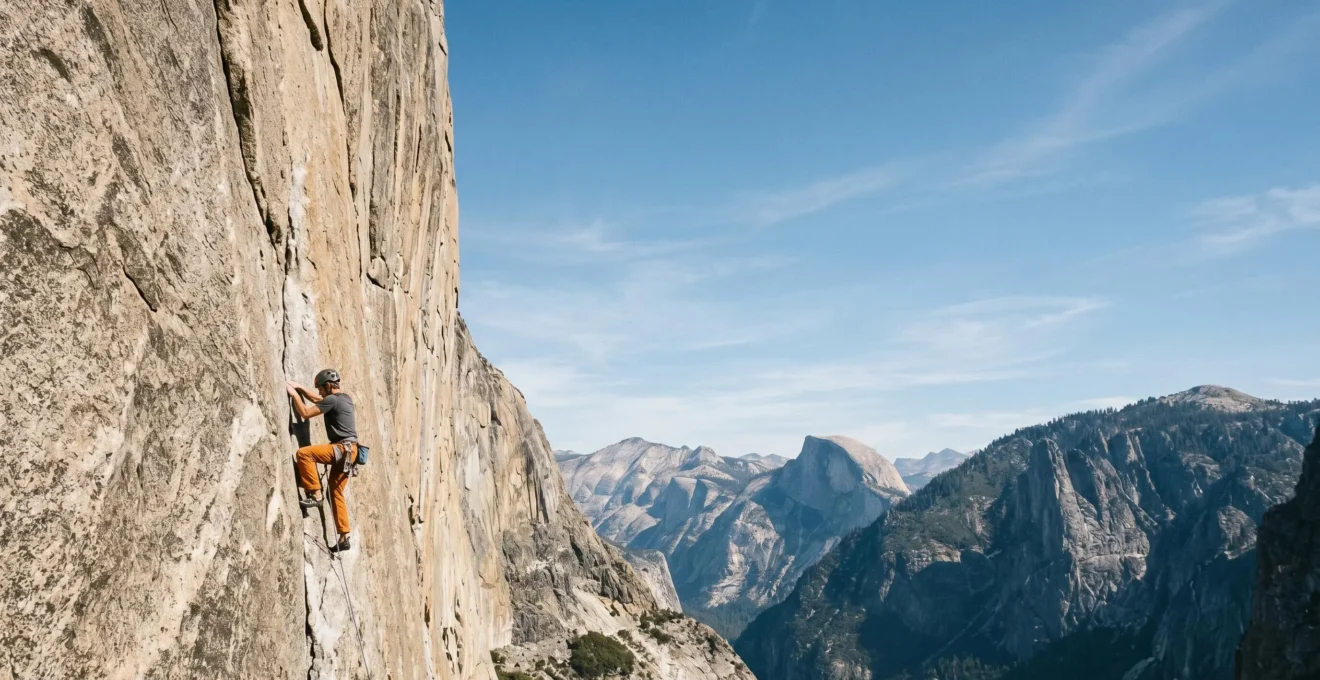
Engaging in controlled-risk sports isn’t thrill-seeking; it’s a therapeutic tool that recalibrates your brain’s response to stress and reward, resetting your dopamine baseline.
- The voluntary, high-stakes focus required by extreme sports triggers a potent neurochemical cocktail that is fundamentally different from the chronic, low-grade stress of daily life.
- This “peak experience” followed by a deliberate recovery can lower cortisol, improve resilience, and make everyday moments more enjoyable by re-sensitizing your dopamine system.
Recommendation: Instead of viewing intense physical activity as an escape, approach it as a strategic practice in mental and neurological regulation to enhance your corporate performance.
As a high-performing professional, you’re familiar with stress. It’s the constant thrum of deadlines, notifications, and the pressure to excel. You might try meditation, or even a weekend getaway, but the underlying feeling of being mentally overdrawn persists. This is the hallmark of chronic, low-grade stress—a state where your brain’s reward system, governed by dopamine, is constantly taxed, leaving you feeling flat and unfocused. The common advice is to seek calm, to disconnect. But what if the most effective solution isn’t to retreat from intensity, but to embrace a different, more potent form of it?
The answer may lie in a paradox: leveraging acute, controlled fear to reset the chronic, uncontrolled stress of modern life. This isn’t about becoming an “adrenaline junkie.” It’s about understanding the neurochemical difference between the cortisol spike from a surprise meeting request and the empowering surge from consciously navigating a challenge. This article explores the science behind this phenomenon. We will dissect how your brain processes voluntary risk, why you can feel mentally sharper after a demanding physical experience, and how to manage the neurochemical aftermath to build lasting resilience.
We’re moving beyond simplistic notions of “flow state” to provide a practical framework for using high-intensity activities as a powerful tool for mental recalibration. By the end, you will see controlled fear not as a danger to be avoided, but as a precise instrument for rewiring your brain for focus, resilience, and a renewed sense of engagement with your life, both in and out of the office.
This guide breaks down the psychological and neurological mechanisms at play, offering a clear path from understanding the theory to applying it in practice. Explore the sections below to learn how to harness these powerful internal systems.
Summary: The Neurochemical Power of Controlled Fear for Peak Performance
- Flow State vs Panic: How to Find the Sweet Spot in Extreme Sports?
- Why Rushing Your Morning Commute Increases Cortisol by 40%?
- Why Gamifying Revision Increases Retention Rates by 40%?
- How to Use Visualization to Calm Nerves Before a Big Drop?
- The Confidence Trap That Injures Intermediate Athletes Most Often
- How to Prepare for a Peak District Hike When Rain Is Forecast?
- Why You Feel Depressed After an Adventure Weekend and How to Fix It?
- How to Sleep After a High-Adrenaline Day?
Flow State vs Panic: How to Find the Sweet Spot in Extreme Sports?
The ultimate goal of engaging in a high-risk sport is to enter the “flow state,” a mental space of complete absorption where action and awareness merge. This is far more than just “being in the zone.” It’s a distinct neurological event. As researcher Mihaly Csikszentmihalyi identified, when you’re in flow, your brain is bathed in a potent neurochemical cocktail: norepinephrine for focus, dopamine for motivation, endorphins for pain suppression, anandamide for creative problem-solving, and serotonin for the contentment that follows. This state is not accidental; it arises when the perceived challenge is perfectly balanced with your skill level.
The razor’s edge between flow and panic is a skill called interoceptive awareness—the ability to accurately sense your internal physiological state. Panic occurs when the challenge dramatically outweighs your skill, triggering a raw amygdala hijack. Flow, conversely, requires you to remain present with heightened arousal, interpreting the signals of a racing heart and quickened breath not as a threat, but as resources for performance. This conscious engagement with risk can result in 40% lower daily anxiety levels for regular participants. Developing this skill is the core of training for extreme sports; you learn to dance with your nervous system instead of being overwhelmed by it.
As the image above illustrates, this state is one of intense, calm focus. The key is to progressively increase the challenge in tiny increments, allowing your skills and your nervous system’s tolerance for arousal to grow in tandem. You are not trying to eliminate fear, but to harness the heightened state it creates, turning potential panic into peak performance.
Why Rushing Your Morning Commute Increases Cortisol by 40%?
Not all stress is created equal. Your brain and body react profoundly differently to stress you choose versus stress that is imposed upon you. The frantic rush of a morning commute, with its unpredictable delays and lack of control, is a perfect example of imposed stress. This type of stress triggers a pure cortisol response. Cortisol is your body’s primary stress hormone; in chronic, low-grade doses, it leads to burnout, anxiety, and a feeling of being constantly on edge. There is no accompanying “reward” from the brain, only a draining sense of threat.
In stark contrast, the stress experienced during a chosen physical challenge, like rock climbing or trail running, involves a crucial element: agency. As neuroscientist Dr. Michael Davis explains, “If something scares us, the body immediately releases endorphins, dopamine and norepinephrine.” The key difference is the context. You chose the challenge. This sense of control transforms the neurochemical response. Instead of just cortisol, your brain releases a cascade that enhances performance.
Research on extreme sports participants clearly demonstrates this distinction. A study on the neurochemical effects of voluntary risk-taking found that dopamine, the neurotransmitter of action and reward, was powerfully released in these scenarios. The critical factor is agency: a chosen challenge produces an empowering neurochemical cocktail, while involuntary stress, like being stuck in traffic, creates chronic cortisol elevation without the rewarding dopamine response. This is why a difficult hike can leave you feeling energized and accomplished, while a difficult commute leaves you feeling drained and frustrated. One builds resilience, the other erodes it.
Why Gamifying Revision Increases Retention Rates by 40%?
At its core, your brain is a reward-seeking machine. The primary chemical driving this behavior is dopamine. As neuroscience research shows, dopamine is a potent reward chemical that reinforces behaviors by making us feel good when we engage in them. It’s not just about pleasure; it’s about motivation and learning. When you successfully complete a task, your brain releases a small amount of dopamine, which tells the neural circuits involved, “Pay attention! This was important. Do it again.”
This principle is precisely why gamification works so well. It hacks this natural reward system. By breaking down a large, daunting task like revision into small, achievable “levels” with clear rewards (points, badges, progress bars), you create a steady stream of dopamine hits. Each small success reinforces the act of studying, making you more likely to continue. This is the same mechanism that makes video games compelling, but applied to a productive end. It transforms a monotonous chore into an engaging challenge.
The same logic applies to physical training. If the only goal is a marathon six months away, motivation can easily wane. But if you gamify it with weekly distance goals, personal bests, and varied workouts, you create multiple opportunities for these rewarding dopamine releases. In fact, research demonstrates it can take up to 20 minutes of exercise for this satisfying dopamine release to activate. Structuring activities to provide these regular neurochemical rewards is the key to building sustainable habits, whether in the office or on the trail.
How to Use Visualization to Calm Nerves Before a Big Drop?
Your brain has a remarkable quirk: it doesn’t always differentiate between a vividly imagined experience and a real one. This is the foundational principle of visualization, or mental rehearsal, a cornerstone technique in sport psychology. When you mentally rehearse an action, you activate the same neural pathways that fire when you physically perform it. This strengthens the motor patterns, making the actual movement smoother and more automatic when the time comes. But its power extends beyond just motor skills.
Visualization is a potent tool for emotional regulation. By repeatedly and vividly imagining yourself successfully navigating a high-pressure moment—like a big drop on a mountain bike or a critical negotiation—you are pre-acclimatizing your nervous system to the situation. You are, in effect, creating a memory of a future event. When the real event occurs, your brain recognizes the pattern and is less likely to trigger a full-blown panic response, thinking, “I’ve been here before, and I know what to do.” It reduces the novelty of the threat, which is a primary driver of anxiety.
Case Study: Mental Rehearsal in Professional Rugby
A study on professional rugby players demonstrated the power of this technique. As detailed in a review of mental rehearsal research, players who participated in a 15-minute guided mental rehearsal session showed significantly enhanced passing skills and stress resilience. Interestingly, the mental rehearsal was associated with elevated levels of salivary testosterone, a hormone correlated with improved stress management and confidence. This shows that visualizing success doesn’t just calm you down; it can trigger a physiological state primed for performance.
The key to effective visualization is multisensory detail. Don’t just see yourself succeeding; feel the grip in your hands, hear the sound of the wind, and most importantly, feel the calm confidence of successful execution. This practice builds a library of success in your mind, a resource you can draw upon when facing real-world fear.
The Confidence Trap That Injures Intermediate Athletes Most Often
There’s a dangerous phase in skill acquisition known as the “intermediate plateau.” It’s a point where you’ve moved past the beginner stage and have enough skill to perform, but not enough expertise to recognize the true limits of your ability. This is where confidence can become a liability. You feel competent, so you start taking bigger risks without a corresponding increase in deep, intuitive skill. This phenomenon is explained by a well-documented cognitive bias: the Dunning-Kruger effect.
In their foundational research, psychologists David Dunning and Justin Kruger found that people with limited knowledge or competence in a domain often have a falsely inflated sense of their own ability. As they famously stated, “Not only do they reach mistaken conclusions and make regrettable errors, but their incompetence robs them of the ability to realize it.” In extreme sports, this translates to the intermediate athlete who has mastered basic techniques but hasn’t yet developed the nuanced judgment that comes from thousands of hours of experience. They don’t know what they don’t know.
The original study quantified this gap dramatically. Dunning and Kruger found that performers in the bottom 25% on a test of humor, grammar, and logic on average, predicted their scores would be above the 60th percentile. This is the confidence trap. An expert, by contrast, is acutely aware of the complexities and potential pitfalls. They possess a “meta-cognition” (an awareness of their own thought process) that the intermediate lacks. For the stressed corporate worker venturing into adventure sports, recognizing this trap is crucial for long-term, injury-free participation. It requires a commitment to continuous learning and a healthy dose of humility, even when your confidence is soaring.
How to Prepare for a Peak District Hike When Rain Is Forecast?
Facing a known challenge, like a hike in predictably bad weather, provides a perfect training ground for the mind. The goal isn’t just to pack the right gear, but to mentally prepare for adversity. One of the most powerful techniques for this is the “pre-mortem.” Unlike a post-mortem, which analyzes failure after it happens, a pre-mortem imagines failure before you even start. You gather your team (or sit down by yourself) and ask: “Imagine it’s six hours from now, and this hike has been a complete disaster. What went wrong?”
This simple reframing bypasses our natural optimism bias and allows you to identify specific, plausible risks: “My waterproof jacket failed,” “I couldn’t read my map in the driving rain,” “The slippery rocks made me lose my footing.” For each imagined failure, you then devise a specific, concrete mitigation strategy. This isn’t just about having a backup plan; it’s about mentally rehearsing the successful execution of that plan. This process builds what psychologists call adaptive confidence—a belief not in your ability to avoid problems, but in your ability to solve them when they arise.
This is the essence of harnessing controlled fear. You are voluntarily stepping into a stressful situation, but you are doing so with foresight and preparation. This transforms anxiety into heightened awareness. As researchers have noted, “It has been indicated that extreme sport activities result in a highly rewarding experience, despite also providing fear, stress and anxiety.” The reward comes not from ignoring the fear, but from proving to yourself that you are capable of managing it. This builds a deep-seated resilience that transfers directly back to the unpredictable challenges of the corporate world.
Key Takeaways
- True flow state is a precise neurochemical event, distinct from panic, that is achieved by balancing high challenge with high skill.
- Your brain distinguishes between chosen stress (like a hike), which can be rewarding, and imposed stress (like traffic), which is merely draining.
- The biggest risk for injury often comes at the intermediate level, when confidence outpaces true expertise due to the Dunning-Kruger effect.
Why You Feel Depressed After an Adventure Weekend and How to Fix It?
You’ve had an incredible weekend, pushing your limits and feeling fully alive. You return to your desk on Monday morning expecting to feel refreshed, but instead, you feel flat, irritable, and unmotivated. This is the “post-adventure blues,” and it’s a real, predictable neurochemical phenomenon. During your peak experience, your brain was flooded with dopamine, the “motivation” molecule. The problem is that your brain strives for homeostasis, or balance. When it experiences such a high level of a neurotransmitter, it compensates by temporarily reducing the sensitivity or number of its dopamine receptors. This is called dopamine downregulation.
As neuroscience research on the topic explains, “Once the brain acclimates to high dopamine levels, it craves more of it, similar to how an addict craves their substance of choice.” In this downregulated state, the normal activities of life—the things that usually provide small, satisfying dopamine releases—are no longer sufficient to register. Your morning coffee, a completed task, a pleasant conversation; they all fail to move the needle. This leaves you in a motivational and emotional trough, a state that can feel a lot like depression.
The solution isn’t to chase another high. It’s to strategically help your brain re-sensitize its dopamine system. This involves a period of deliberate “low-dopamine” activity, allowing your receptors to reset to their normal baseline. It’s a conscious wind-down process that is as crucial as the adventure itself for building long-term mental resilience.
Your Post-Adventure Dopamine Reset Protocol
- Morning Sunlight Exposure: Within 30 minutes of waking, get direct sunlight exposure for 10-15 minutes. This helps regulate your circadian rhythm and supports natural, healthy dopamine production.
- Low-Intensity Movement: For 1-3 days, stick to low-intensity exercise like walking or gentle yoga. Avoid high-intensity workouts that could cause another major dopamine spike.
- Tyrosine-Rich Nutrition: Consume nutrient-dense foods rich in tyrosine, a precursor to dopamine. Good sources include almonds, avocados, lean proteins, and bananas.
- Implement a Digital Detox: Actively avoid high-dopamine, low-effort stimuli. This means no mindless social media scrolling, video games, or binge-watching TV shows.
- Integrate the Experience: Practice journaling or storytelling. The act of “cognitive off-boarding”—structuring the peak experience into a personal narrative—helps your brain process and integrate it, signaling completion.
How to Sleep After a High-Adrenaline Day?
One of the great paradoxes of a high-adrenaline day is the difficulty of sleeping afterward. You’re physically exhausted, yet your mind is racing, and your body feels wired. This is the lingering effect of your sympathetic nervous system—your “fight or flight” response—remaining active. While the initial dopamine and adrenaline rush is over, your system is still on high alert. The key to a restful night’s sleep is to consciously activate your parasympathetic nervous system, also known as the “rest and digest” system.
The good news is that the hormonal aftermath of a peak experience can actually help. After the initial adrenaline rush, research shows that cortisol levels can drop below average for several hours. This creates a window of opportunity for deep rest, but you must actively guide your body into it. This is done by stimulating the vagus nerve, a major component of the parasympathetic nervous system that acts as a brake on your body’s stress response.
You can do this with simple, powerful techniques. The “physiological sigh”—a double inhale through the nose followed by a long exhale through the mouth—is one of the fastest known ways to calm the nervous system. Another is applying cold water to your face, triggering the mammalian dive reflex, which instinctively slows the heart rate. Finally, a crucial step is “cognitive off-boarding.” Before bed, spend ten minutes writing in a journal. Structure it: What happened today? What did I learn? What am I proud of? This act of narrative closure signals to your brain that the “task” of the day is complete, allowing it to disengage from its problem-solving mode and enter a state of rest.